

Available at:


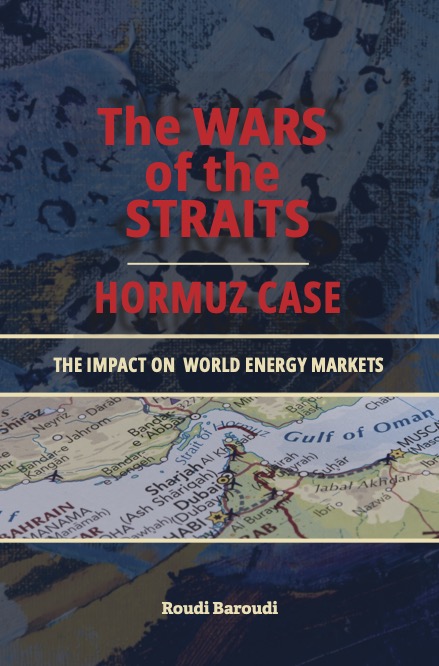
The Wars of Straits: Hormuz Case
When the first tanker burst into flames off the coast of Oman on March 1, 2026, it marked the start of a crisis that had haunted energy analysts for decades: the closure of the Strait of Hormuz. As war between the US, Israel, and Iran engulfed the Gulf, this narrow, shallow waterway, the conduit for a huge share of the world’s oil, gas, and petrochemical exports, became the central battleground of the conflict, sending shockwaves through global supply chains, food security, and consumer prices everywhere.
In The Wars of the Straits, veteran energy consultant Dr. Roudi Baroudi draws on more than four decades of firsthand experience in MENA region with oil and gas, from building Saudi Arabia’s landmark pipelines and refineries in the late 1970s and ’80s to advising the World Bank, the IMF, and the European Commission on energy policy, to deliver a comprehensive account of the 2026 crisis and the long history behind it. Tracing the concept of “wars of the straits” back nearly seven centuries, through the Bosphorus conflicts of medieval Venice and Genoa to the Tanker War of the 1980s, Dr. Baroudi situates Hormuz within a much older story of chokepoints, empires, and the perennial temptation to weaponize maritime passage.
The book combines geopolitical narrative with rigorous legal and technical analysis: the international law governing the Strait, the practicalities of alternative pipeline routes, the economic and environmental fallout of disrupted shipping, and the naval and commercial engagements of the 2026 war itself. Extensive appendices cover the US-Iran Memorandum of Understanding, global straits and canals, the strategic link to Bab el-Mandeb, and key maritime boundary agreements in the region.
Equal parts history, legal brief, and policy argument, The Wars of the Straits makes an urgent case for a durable, internationally sanctioned framework, grounded in law, science, and fact, to guarantee freedom of passage through Hormuz. For energy professionals, policymakers, and anyone seeking to understand how a single waterway can hold the global economy hostage, this is essential reading on one of the defining crises of our time.